-
MMM – Memos on Math/Music: This site lists memos on music and math by the site owner.
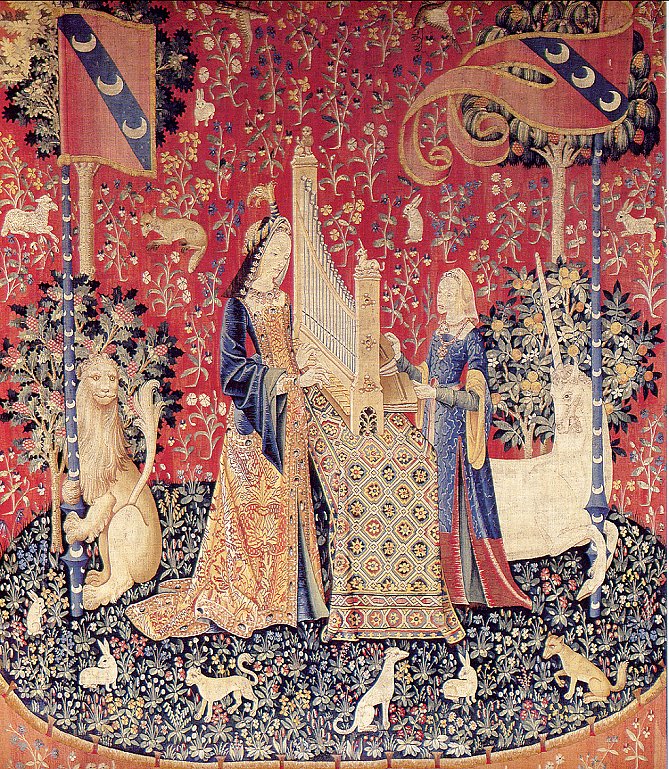
The music will be listed as mp3 files. Those files have a portrait of the composer as an eye-catcher:
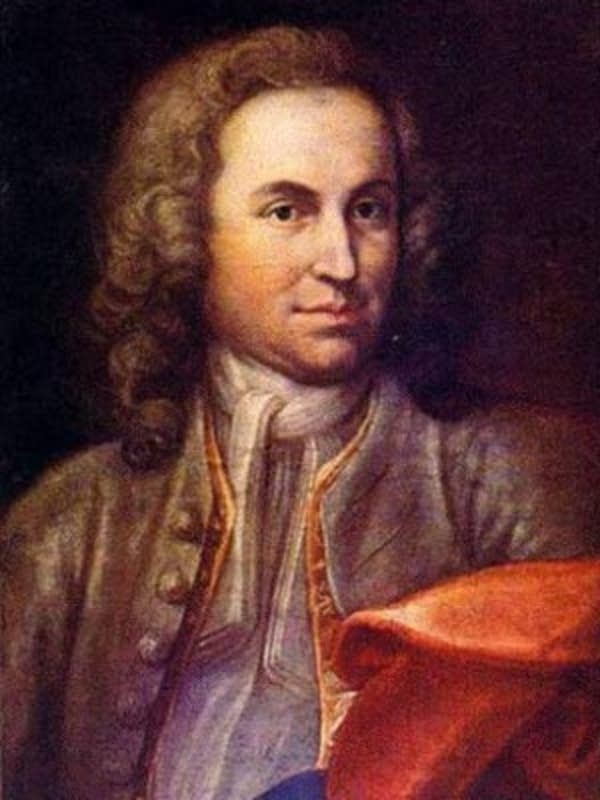
e.g., J. S. Bach’s music on periodic instrumentation has the following portrait,
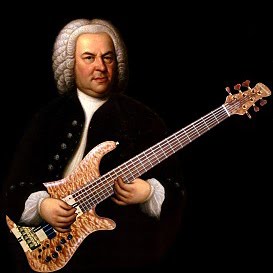
whereas modern interpretation of J.S. Bach’s music has the following portrait.
Many thanks from the site owner to MuseScore https://musescore.com/ without which he can never create mp3 files.
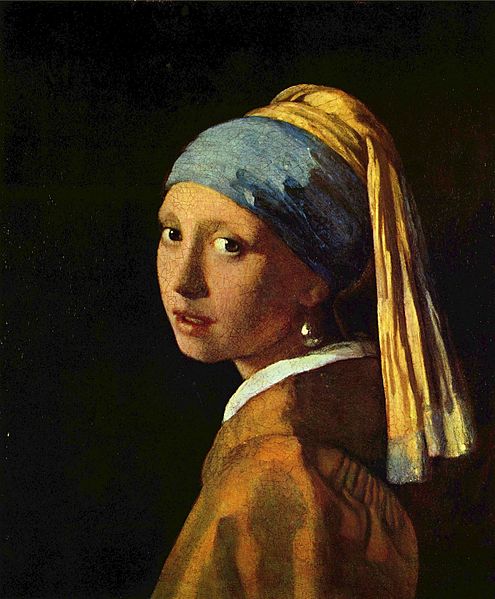
The math will be listed as PDF files. Some of them are typed using conventional word processors, and others are in LaTeX. Those files have “Girl with a Pearl Earring” by Johannes Vermeer as an eye-catcher: see below.
The site owner would like to express his appreciation to his cousin and the spouse (of the cousin) for suggesting that he should set up a site to list his “achievement” so far.
To view the content, click the URL line for each index below.
———————————————————————-
Index for the work by J. S. Bach
https://wordpress.com/post/mathmusic52.com/2030
———————————————————————-
Index for memo on mathematics
https://wordpress.com/post/mathmusic52.com/2038
Index for the work by D. Scarlatti
-
BWV 988: J. S. Bach “Goldberg variations”
Created using MuseScore.
Tuned with A = 415 Hz.
-
BWV 1079: J. S. Bach ”Musical offering” (Under construction)
Created using MuseScore.
Tuned with A = 415 Hz.
J. S. Bach has barely specified the instrument(s) except for “Trio” and “Canone perpetuo” (“flauto traverso, violin and continuo”). Still worse, the organisation is enigmatic and scattered with riddles. Thus instrumentation (and sometimes finding the “real” music intended by the composer) should be done by guess work.
Ricercare a 3 voci : harpsichord sound
Ricercare a 6 voci: two harpsichords
This part is enigmatic: there are five (5) clefs used – treble, soprano, alto, tenor (twice) and bass. The site owner assigned the first, third and fifth staves to one harpsichord and the second, fourth and sixth to another. Of course, all staves could be assigned to one harpsichord, like this –> https://www.youtube.com/watch?v=ViCLYbtJ1bQ, but the site owner prefers the two-harpsichord organisation.
Canone Inverso (or Canone Cancrizzante)
Seemingly the simplest canon in BWV 1079 with only one stave. Actually, another stave is concealed as a mirror image (hence the name “Inverso”), and each stave has to go back from the end to the start: that is, two mirror images are hidden, one bottom-to-top, the other one end-to-start.
-
The Galois group of the field of real numbers
This is a solution of an exercise (with no solution) in “Fields and Rings” by I. Kaplansky.
-
BWV 1049: J. S. Bach “Brandenburg concerto IV” in G major
Created using MuseScore.
Tuned with A = 415 Hz.
-
BWV 1047: J.S. Bach “Brandenburg concerto II” in F major
Created using MuseScore.
Tuned with A = 415 Hz.
-
An interesting property of prime numbers greater than or equal to 5
-
BWV 1052: J. S. Bach “Harpsichord concerto” in D minor on electric-guitars
Created with MuseScore.
Tuned with A = 440 Hz.
Inspired by Erik Ryde, https://www.youtube.com/watch?v=Ix7PVdBnlEo
-
BWV 1051: J. S. Bach “Brandenburg concerto VI” in B flat major
Created using MuseScore.
Tuned with A = 415 Hz.
-
BWV 1052: J. S. Bach “Harpsichord concerto” in D minor
Created using MuseScore.
Tuned with A = 415 Hz.
Probably the most famous keyboard concerto of J. S. Bach. Some people argue that this is a transcription, by the composer himself, of a lost violin concerto. Audacious people have made up several “re-construction”s.
-
BWV 1046: J. S. Bach “Brandenburg concerto I” in F major
Created using MuseScore.
Tuned with A = 415 Hz.
-
Subscribe
Subscribed
Have a WordPress.com account? Log in now.

